Risk Management · 2025
In this section2 topics
Risk Management Policy & Plan
Policy & Plan Description
Risk and Crisis Management
Nirvana Development Public Company Limited recognizes that risk management is an integral part of good corporate governance and a fundamental mechanism that enables the Company to achieve its defined strategic objectives. Effective risk management enhances the quality of decision-making in areas of governance, strategy, objective setting, and overall business operations.
Risk Management Policy
The Company has established a risk management policy that sets out an operational framework and processes for managing risks across the organization. In this regard, the Company has adopted and applied the principles of the COSO Enterprise Risk Management (ERM) Framework in identifying and assessing risks arising from its business activities.
Risk Management Structure
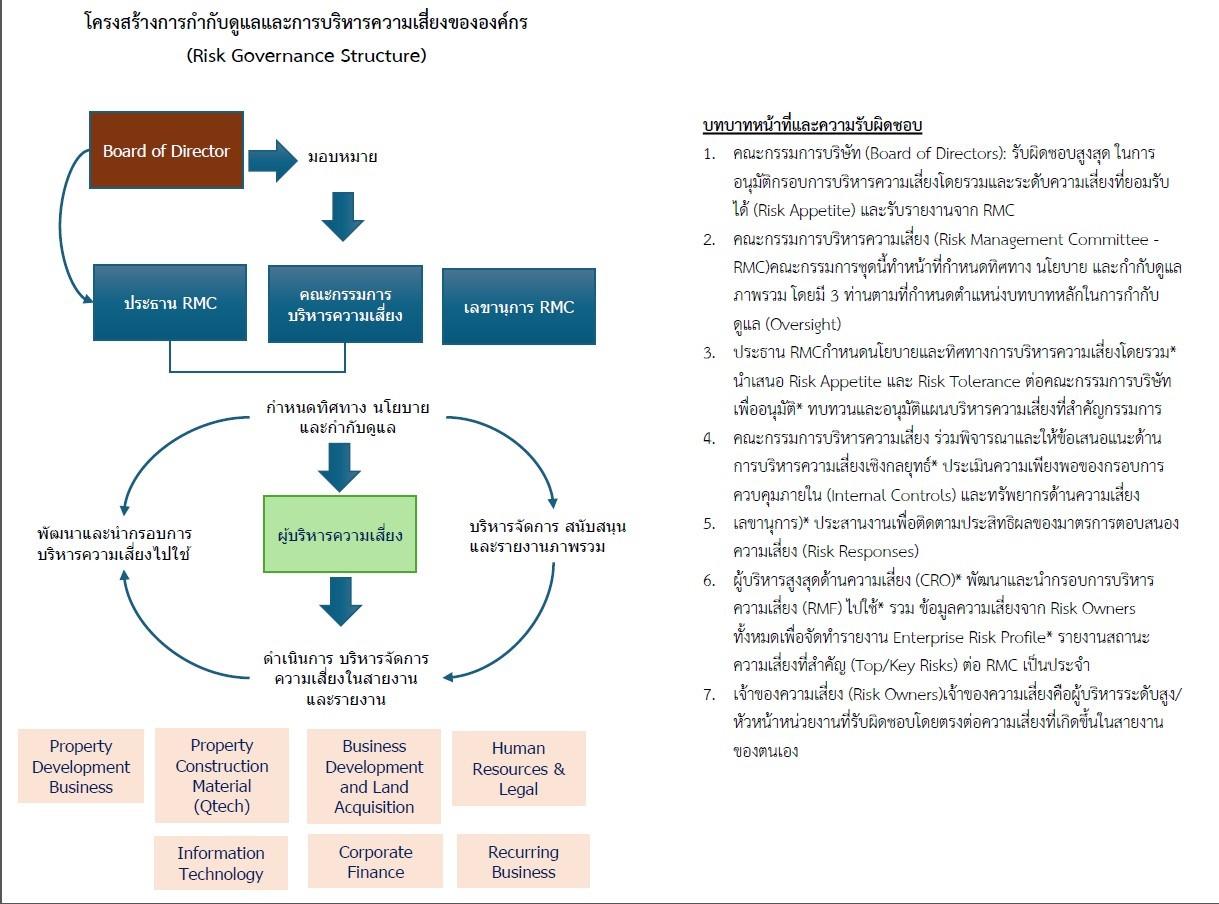
The Risk Management Committee has been appointed by the Board of Directors to determine risk management policies and operational frameworks, as well as to monitor, review, and provide opinions and recommendations on enterprise-wide risk management. The Committee also considers various risk factors affecting the Company and determines appropriate risk management approaches to ensure that such risks remain within acceptable levels (Risk Appetite).
The Company has designated a responsible unit to monitor and manage risks in accordance with the established policy, reporting directly under the Office of the Chief Executive Officer in order to maintain independence in risk oversight. In addition, all departments are assigned the role of Risk Owners, responsible for preparing, reviewing, and overseeing the management of risks under their respective areas of responsibility, as well as monitoring risk issues and reporting them to the Risk Management Committee.
Risk Management Culture
A risk management culture is a key component of the Company’s risk management framework. The Company is committed to fostering a strong risk management culture throughout the organization and aims to ensure that employees are aware of risks arising from their work and take responsibility for managing such risks. In addition, the Company encourages appropriate risk management attitudes and behaviors among employees in order to establish a sound and effective risk management culture. The implementation guidelines are as follows:
Establish risk management policies, objectives, a risk management framework, and risk management guidelines.
Implement the established guidelines and continuously monitor progress at the Board level, management level, and operational level.
Continuously communicate and enhance knowledge and understanding of risk management within the organization through various channels, such as internal communication boards and training programs.
In 2025, the Company promoted awareness and understanding of risk management through training programs for all employees. One risk management training course (mandatory course) was conducted via an online platform during August 2025.
Risks to the Company's Business Operations
Introduction
Analysis, Assessment and Major Risk Management
Risk Register
| Risk Name | Risk Characteristics | Consequences | Management Measures | Related Risk Factors |
|---|---|---|---|---|
| Environmental Risk | Environmental Risk Climate change resulting from global warming is one of the most significant environmental issues worldwide. To date, measures to control the increase in the global average surface temperature to no more than 2 degrees Celsius above pre-industrial levels have not been successful. This has resulted in an escalation of various risks, both direct—such as natural disasters and drought—and indirect—such as the implementation of more stringent regulations and new standards, changes in consumer behavior, and technological changes. Accordingly, the Company must establish management approaches and response measures to address climate change in order to mitigate potential impacts on production costs, competitiveness, and the sustainability of future business operations. The Company recognizes these risks and has therefore established management approaches to address climate change, with the aim of reducing potential impacts on operating costs, competitiveness, and the long-term sustainability of the business. | Climate change may have impacts on production costs, competitiveness, and the sustainability of business operations. | Prevention approach The Company has conducted analyses of climate change–related risks and opportunities across multiple dimensions and has applied innovation concepts to the design and development of its products in alignment with energy conservation practices and environmental impact reduction, including:
In addition, the Company has installed a solar power generation system (solar cells) within the community mall area of the Nirvana Porch Project to serve as renewable energy, helping to reduce the use of fossil-fuel-based energy and lower the project’s long-term energy costs.
| 750 · Description: Climate change and disasters · Info category: OPERATIONAL_RISK · 1717 · Description: ESG risk · Info category: STRATEGIC_RISK · 1719 · Description: Climate change and disasters · Info category: STRATEGIC_RISK |
| Social risk | Risks of human rights violations Conducting business responsibly in accordance with international human rights frameworks is an issue of growing global importance. In particular, business expansion and growth require the use of labor as a key driver of success, which may give rise to operational risks related to human rights violations. In addition, global attention has increasingly focused on gender equality as well as other forms of social equality, such as religion, skin color, and race, together with respect for diversity of opinions, which are increasingly being integrated into organizational business practices. Accordingly, the Company recognizes the importance of systematically managing human rights and labor issues in its business operations in order to prevent risks and potential impacts arising from human rights violations affecting stakeholders or any related individuals. The Company is therefore committed to adapting and preparing itself to reduce the risk of human rights violations throughout its business value chain. The Company is committed to conducting its business in accordance with its human rights and labor practices policies to prevent human rights violations affecting all stakeholder groups arising from its operations throughout the supply chain. The Company has established practices aligned with international standards, including the United Nations Guiding Principles on Business and Human Rights (UNGP) and the International Labour Organization (ILO) Declaration on Fundamental Principles and Rights at Work, as well as the labor laws of each country in which the Company operates. | Impacts of Risks
| Prevention approach
| 756 · Description: Change in laws and regulations · Info category: COMPLIANCE_RISK · 738 · Description: Reliance on employees in key positions · Info category: OPERATIONAL_RISK · 739 · Description: Shortage or reliance on skilled workers · Info category: OPERATIONAL_RISK · 753 · Description: Impact on human rights · Info category: OPERATIONAL_RISK |
| Compliance Risk | Risks Arising from Changes in Laws, Regulations, and Rules Related to the Real Estate Business Real estate business operations are subject to various laws and regulations, including town planning laws, the Land Allocation Act, the Condominium Act, as well as regulations governing land use (zoning). These laws and regulations are complex and are subject to ongoing revisions or amendments. | Such changes may affect business planning, design, construction permit approvals, as well as the costs and timelines for the development of both low-rise and high-rise projects. | Prevention approach The Company exercises due care to ensure that its operations fully comply with applicable laws and regulations, as any non-compliance or incomplete compliance may affect costs, project development timelines, and the Company’s overall business plans. To mitigate risks arising from laws, regulations, and rules related to the real estate business, the Company places strong emphasis on strict legal compliance from the initial stage prior to land acquisition for project development. A dedicated working group has been established to carefully review legal constraints related to project investment and development, including both currently effective regulations and those expected to be enacted in the near future, in order to ensure that the Company can respond and adapt in a timely manner. | 756 · Description: Change in laws and regulations · Info category: COMPLIANCE_RISK · 759 · Description: Corporate Governance · Info category: COMPLIANCE_RISK |
| Strategic Risk | Risks Arising from Economic Contraction and a Highly Competitive Market Amid an economic slowdown driven by several risk factors—such as high household debt, increasing non-performing loans, stricter approval of new housing loans by financial institutions, persistently high interest rates, geopolitical issues, and ongoing government policies to address economic challenges—business operators are required to adapt to the current situation. There is a tendency that in 2026 the economy will continue to slow down, albeit at a lower rate. As a result, developers have delayed new project launches, particularly condominium projects and houses priced below THB 10 million, while the premium housing segment continues to grow. Despite economic challenges, the premium housing market continues to expand as developers adjust to meet the demand of high-purchasing-power consumers. Approximately 90% of newly launched single-detached houses are priced above THB 20 million. Prices in this segment are expected to increase further due to rising land prices and increasing land scarcity. In the current year, the real estate sector continues to face pressure from multiple risk factors, resulting in a slowdown in the growth of new housing launches in Bangkok and its vicinity since 2025. Although there are property market stimulus measures from the government, both developers and consumers remain cautious due to ongoing economic uncertainty. Under prevailing economic conditions, sales promotions and marketing activities have become relatively difficult. Rising household debt, stricter lending policies by financial institutions, and the suspension of LTV relaxation measures have made it more difficult for customers to obtain housing loans or have resulted in lower approved loan amounts. In addition, developers are affected by higher interest expenses as part of their costs, increased labor costs, higher land prices, and rising construction material costs. Collectively, these factors are expected to lead to an increase in housing selling prices of approximately 5–10%, while customers’ ability to obtain housing loans continues to decline. |
| Prevention approach Although the real estate market trend in 2024–2025 shows a decline in both demand and supply compared to the previous year, the Company has adjusted its sales strategies to align with prevailing market conditions by focusing on customer segments with genuine demand (real demand). The Company emphasizes product differentiation in order to effectively respond to consumer needs, including appropriate project locations, well-designed products, and competitive pricing. In addition, the Company places importance on prudent cost and expense management, as well as maintaining cash flow at an appropriate level to support business operations. Furthermore, the Company has undertaken businesses that generate stable and continuous recurring income, such as the parking building located in Soi Chuey Phuang on Vibhavadi Rangsit Road near the Ladprao Five Intersection, and the Nirvan Porch community mall. The Company also plans to further expand its recurring income businesses in the future. | 728 · Description: Volatility in the industry in which the company operates · Info category: STRATEGIC_RISK · 730 · Description: Government policy · Info category: STRATEGIC_RISK · 1715 · Description: Economic risk · Info category: STRATEGIC_RISK |
| Risks associated with acquiring land for future development projects | Land is considered a key factor in real estate development. The consideration of location and site selection is the most critical factor in conducting real estate business. Accessibility to essential public infrastructure—such as roads, mass transit systems, electric railways, water supply, and electricity—is an important determinant. Locations with strong development potential are therefore highly sought after by real estate developers. As land is a primary factor in real estate development operations, and the Company focuses on developing projects along newly constructed roads and within community areas—which are also in high demand among developers—this results in intense competition for the acquisition of high-potential land. The procurement of land in locations that are not aligned with the Company’s business plan, or risks associated with acquiring land at high prices, may adversely affect operational plans and project development costs. Such circumstances may also result in the inability to develop projects that generate investment returns in accordance with the Company’s investment policy. | Impacts of the Risk from Land Acquisition for Future Project Development Impact on Project Development Plans Difficulties in acquiring land in suitable locations or delays in land acquisition may result in the postponement or cancellation of planned projects, thereby affecting the Company’s overall business plans and growth strategy. Impact on Project Development Costs Intense competition for high-potential land and rising land prices may lead to higher land acquisition costs. This directly increases overall project development costs and may reduce the feasibility of projects. Impact on Competitive Position Inability to secure land in strategic or high-demand locations may weaken the Company’s competitive advantage in the market, as competitors with better locations may be able to attract customers more effectively. | Prevention approach To mitigate the aforementioned risk factors, the Company has established long-term investment plans in advance and defined land acquisition plans that are aligned with its business plan, liquidity position, and prevailing economic conditions. This also includes contingency plans to accommodate potential changes and uncertainties in the future in accordance with evolving circumstances, such as land procurement for project development and the assessment of the appropriateness of launching new projects. The Company conducts thorough feasibility studies prior to making investment decisions for project development. In addition, the Company has implemented a stringent and transparent process prior to land acquisition decisions. A dedicated working committee is responsible for reviewing market data, competitor information, land prices in comparison with government appraised values, and valuations provided by independent appraisers. These factors are used as a framework for determining suitable locations and appropriate prices in collaboration with the Company’s partner brokers. This process enables the Company to reduce risks arising from the inability to acquire land in locations and at prices that are consistent with the Company’s business plans. | 740 · Description: Shortage or fluctuation in pricing of raw materials or productive resources · Info category: OPERATIONAL_RISK |
| Risk from the Increase in Construction Material Prices | Based on the overall construction material price index data for 2025, construction material prices in the market continue to reflect volatility. Prices of construction materials such as steel, cement, concrete, and interior finishing materials tend to fluctuate in line with economic conditions, inflation rates, energy costs, and market supply–demand dynamics. Any increase in material prices may directly affect the Company’s project development costs and profit margins if such increases cannot be managed effectively. Looking ahead to 2026, construction material prices are expected to remain volatile, particularly in the steel and cement categories, where demand remains uncertain in both global and domestic markets. The recovery of investment in government projects, including large-scale infrastructure projects, may increase demand for certain groups of construction materials. Energy prices remain a key factor affecting production processes and construction material costs. | Fluctuations and increases in the prices of construction materials, such as steel, cement, concrete, and interior finishing materials, may result in project development costs exceeding the original estimates if such costs cannot be effectively controlled or managed. | Prevention approach The Company places strong emphasis on closely monitoring construction material prices and labor costs. The Company evaluates construction costs and total project-related expenses from the investment feasibility study stage in order to fully reflect all costs and to determine appropriate selling prices. Effective control of construction material prices therefore helps reduce the risk of rising project development costs and enables the Company to maintain its profitability in a significant manner. Accordingly, the Company places importance on mitigating such risks. The Company procures major construction materials—being materials that are used extensively and have high value in project development—for each contractor. Purchasing construction materials in large quantities at a time provides the Company with greater bargaining power compared to allowing contractors to procure materials on their own. As a result, the Company is able to purchase construction materials at more favorable prices, which helps control costs and ensure the quality of key construction materials for each project in accordance with established standards. This approach also helps reduce the financial burden on contractors with relatively limited liquidity. In addition, the Company negotiates with manufacturers of key construction materials used in each project to agree on material supply prices in advance, with the objective of mitigating price volatility. Such actions enable the Company to maintain project costs within the planned range for the specified period or throughout the project duration, which is an important method for reducing the Company’s production risk arising from increases in construction material prices. | 740 · Description: Shortage or fluctuation in pricing of raw materials or productive resources · Info category: OPERATIONAL_RISK |
| Risk Arising from the Shortage of Contractors and Skilled Labor | The shortage of construction workers and skilled labor continues to be a significant challenge for the real estate business. As the Company operates in both real estate development and construction contracting, the availability of contractors and labor is therefore a key factor in its operations. The Company has improved its process for procuring main contractors to also cover the procurement of construction materials, as well as enhanced construction processes to ensure quality in accordance with established standards. The Company manages such risks through the following measures:
| Impact on Construction Timeline and Project Delivery The shortage of contractors and skilled labor may cause construction delays and prevent operations from proceeding in accordance with the planned schedule. As a result, project delivery to customers may be delayed, which may adversely affect customer confidence. Impact on Construction Costs and Project Costs Intensified competition for labor may lead to increases in labor costs and contractor fees, resulting in overall construction costs exceeding the original estimates and affecting the Company’s ability to effectively control project costs. Impact on Construction Quality If the Company is unable to secure a sufficient number of qualified contractors and skilled labor, construction quality may fail to meet established standards and may result in additional costs for rectification or remedial works. | Prevention approach To reduce reliance on labor through construction technology, the Company has adjusted certain construction methods from conventional construction to precast construction. This approach utilizes precast concrete walls and components manufactured in factories and assembled on-site. Such measures help reduce dependence on labor, accelerate the construction process, and maintain construction quality in accordance with established standards. | 739 · Description: Shortage or reliance on skilled workers · Info category: OPERATIONAL_RISK |
| Liquidity and Funding Risk | In the past year, the real estate sector has continued to face significant challenges arising from weakened purchasing power as a result of high household debt levels and fragile economic conditions. At the same time, rising development costs have intensified market competition on an ongoing basis. In addition, stricter lending measures imposed by financial institutions have placed considerable pressure on developers from various external factors. Furthermore, real estate development is a capital-intensive business that requires substantial investment and involves long project development periods. Insufficient funding or a lack of liquidity may adversely affect project development. Therefore, effective liquidity management and the securing of appropriate funding sources are critically important to the conduct of the business. | If the Company is unable to effectively manage its liquidity or secure sufficient funding sources, such circumstances may adversely affect the Company’s project development plans, resulting in delays or the inability to proceed with projects in accordance with the established plans, which may, in turn, impact the continuity of the Company’s business operations. | Prevention approach The Company places importance on managing liquidity risk and securing sufficient funding sources to ensure adequate cash flow for project development—neither excessive to the extent of incurring opportunity costs nor insufficient to the extent of adversely affecting project development. The Company has formulated liquidity strategies aligned with its corporate objectives in order to forecast future cash positions and to maintain an appropriate debt-to-equity ratio, particularly with respect to interest-bearing liabilities. With regard to access to funding sources, the Company mitigates potential risks by negotiating credit terms with financial institutions to align as closely as possible with the Company’s operational plans. In addition, the Company secures supplementary funding or credit facilities as reserves for both short-term and long-term needs. | 761 · Description: Insufficient sources of funding · Info category: FINANCIAL_RISK · 1724 · Description: Liquidity risk · Info category: FINANCIAL_RISK |
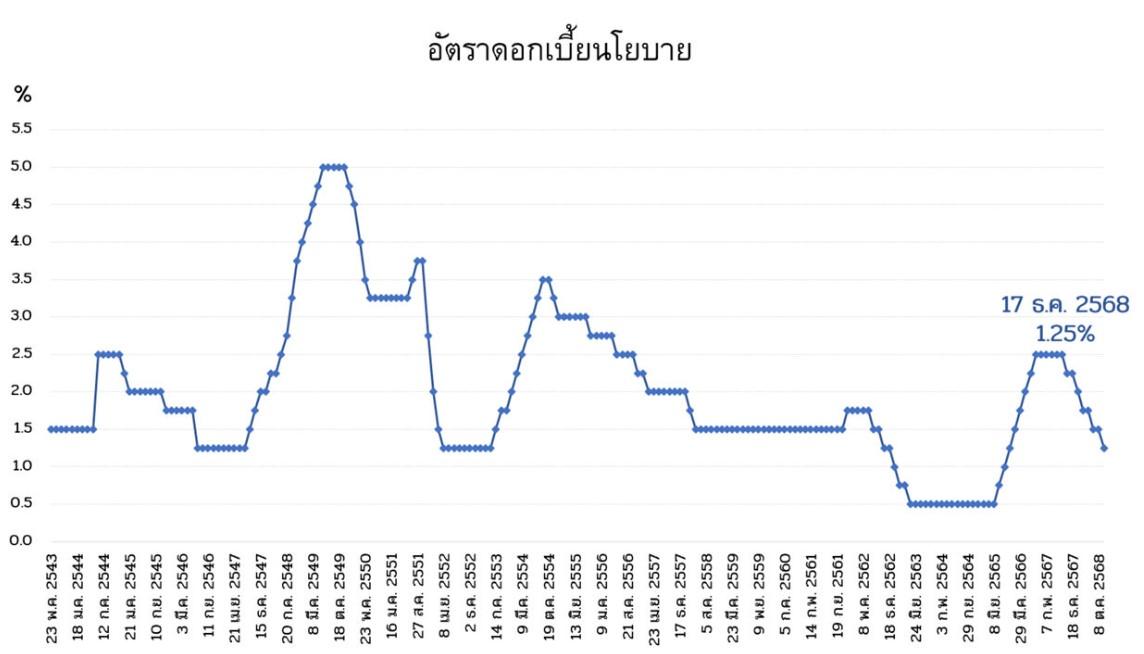
| Interest Rate and Foreign Exchange Risk | During the first half of 2025, the economy expanded at a satisfactory pace, driven by accelerated production and exports to the United States, as well as continued growth in electronic product exports in line with the technology product cycle. These developments generated positive spillover effects to the manufacturing sector and related service industries. However, from the second half of 2025 onward, the economy showed signs of a slowdown, as certain industries temporarily suspended production in the third quarter, exports began to be affected by tariff measures imposed by the United States, the recovery of the tourism sector progressed gradually, and private consumption showed a moderating trend. In 2025, the Bank of Thailand reported that the Monetary Policy Committee (“MPC”) resolved to cut the policy interest rate four times and to maintain the rate on two occasions, resulting in a reduction of the policy rate from 2.25 percent to 1.25 percent (data as of 17 December 2025). The Committee was of the view that Thailand’s economy in 2026 and 2027 is likely to expand at a slower pace compared to the first half of 2025, in line with declining private consumption following income trends and exports affected by U.S. tariff measures, while the tourism sector is expected to recover gradually. Headline inflation is projected to remain at a low level due to declining energy and fresh food prices, while demand-side inflationary pressures remain limited as economic growth is below potential. In the financial sector, overall credit continues to contract, and credit quality among vulnerable groups has shown signs of deterioration, particularly among small and medium-sized enterprises (SMEs), which face liquidity pressures from both limited access to funding sources and the appreciation of the Thai baht. In this regard, the Committee considered that monetary policy could be further eased to support economic recovery and help alleviate debt burdens among vulnerable groups, as well as enhance the effectiveness of financial measures and other government policies.
Source: Bank of Thailand For the Company, which has access to funding sources in the form of both fixed-interest-rate loans and floating-interest-rate loans for project development, the reduction in the policy interest rate in 2025 resulted in a decrease in the Company’s financial costs, particularly for floating-rate loans. This supported liquidity and reduced overall interest expenses. In 2025, the Thai baht exchange rate remained highly volatile and tended to fluctuate within a wide range, with periods of appreciation driven by the depreciation of the U.S. dollar and increases in gold prices, as well as periods of depreciation resulting from Thailand’s economic vulnerabilities and uncertainties surrounding U.S. policy. Key drivers of this volatility included the monetary policy direction of the U.S. Federal Reserve (Fed), risks arising from trade wars, and the growth outlook of the Chinese economy. Depreciation of the Thai baht may lead to higher import costs for construction materials, while appreciation of the baht may affect the Company’s ability to sell projects to foreign customers. Meanwhile, in the debt capital market, investors have continued to express concerns over default risks over the past one to two years, particularly in relation to debentures. As a result, the Securities and Exchange Commission (SEC) has tightened the criteria for the approval and offering of debt instruments, as well as enhanced disclosure requirements to better align with prevailing conditions, effective from 1 August 2024. Consequently, yields on debt instruments, or debenture interest rates, have remained at relatively high levels. In response, the Company has continuously adjusted its loan portfolio since 2024 to appropriately manage financial costs and liquidity risks. | Fluctuations in the policy interest rate may result in changes to the Company’s interest expenses, particularly for loans with floating interest rates, which may increase financial costs and adversely affect the Company’s operating performance and profitability. In addition, such fluctuations may impact liquidity and financial planning, as uncertainty regarding interest rate trends and financial market conditions may pose greater challenges to liquidity management and access to funding sources. | Prevention approach Risk Mitigation Measures The Company has planned and managed its loan structure appropriately by adjusting the proportion of borrowings with fixed interest rates, reducing such proportion from 10 percent in the first quarter to 7 percent in the third quarter, in line with the downward trend of interest rates in 2025. As a result, the Company’s financial costs decreased in accordance with the reduction in the policy interest rate. At the same time, the Company’s debt instruments issued in the form of debentures carry fixed interest rates. In light of the upward trend in interest rates driven by market risks and investor concerns, following the full repayment of all outstanding debentures, the Company currently has no plan to issue additional debentures in 2025. In addition, the Company has opened a Foreign Currency Deposit (FCD) account for resident juristic persons to enhance the effectiveness and appropriateness of liquidity management and foreign exchange risk management. | 761 · Description: Insufficient sources of funding · Info category: FINANCIAL_RISK · 762 · Description: Change in financial and investment policies of financial institutions that affect business operations · Info category: FINANCIAL_RISK · 764 · Description: Fluctuation in exchange rates, interest rates, or the inflation rate · Info category: FINANCIAL_RISK |
| Personal Data Protection Compliance Risk | Pursuant to the Personal Data Protection Act B.E. 2562 (2019) (“Personal Data Protection Act: PDPA”), which was published in the Royal Gazette on 27 May 2019 and subsequently postponed until it came into force on 1 June 2022, the Company had already announced and implemented the PDPA within the organization effective from 1 December 2021. However, the Company’s operations involve personal data of various groups of stakeholders, including customers, merchants, business partners, and employees, as well as personnel across multiple departments and locations. As a result, there may be risks of incorrect or incomplete practices in compliance with the prescribed measures, such as the provision of privacy notices and obtaining consent, responding to data subject rights requests, and managing personal data breach incidents, among others. | In the event that data subjects exercise their rights under the PDPA and the Company fails to consider and respond to such requests in accordance with its legal obligations, or if the Company does not comply with the PDPA resulting in a personal data breach, such incidents may adversely affect the Company’s business. The Company may be subject to civil, criminal, and administrative penalties. In addition, such incidents may cause reputational damage and undermine the Company’s credibility with customers. | Prevention approach The Company has appointed a working team and representatives from various departments to be responsible for reviewing work processes related to personal data, such as the collection, storage, use, transfer, and destruction of data, in order to establish operational measures in compliance with applicable legal requirements. The team is also responsible for communication, providing training and knowledge, and supervising personnel to ensure compliance with the established guidelines. In addition, the Company emphasizes the use of technology and tools at various stages of personal data management to reduce the likelihood of errors arising from human operations. | 758 · Description: Violations of laws and regulations · Info category: COMPLIANCE_RISK · 753 · Description: Impact on human rights · Info category: OPERATIONAL_RISK |
| Management Risk | As of 31 December 2025, the major shareholders of the Group are the Somwattana Group and the Piyasombatkul Group, which collectively hold approximately XX percent of the total issued shares. Consequently, these major shareholders have the power to control the Group and exert significant influence over the Group’s decision-making in all matters requiring approval at the shareholders’ meeting. | Accordingly, minority shareholders of the Group are exposed to the risk of being unable to accumulate sufficient voting power to effectively monitor and counterbalance matters proposed by the major shareholders for consideration at the shareholders’ meeting. In addition, such concentrated shareholding by the major shareholders limits the possibility that the Group could be subject to a takeover by other parties without the consent of these major shareholders. | Prevention approach The Company has appointed five external individuals as independent directors and members of the Audit Committee. Out of a total of nine directors, this structure provides a certain level of checks and balances over the Company’s management. In addition, in the case of transactions involving directors, major shareholders, controlling persons, or any persons who may have conflicts of interest, such persons shall not be entitled to vote on the approval of such transactions. | 1741 · Description: Corporate ownership structure risk · Info category: STRATEGIC_RISK |
| Emerging Risk 1 Technological Disruption Risk | During the year, the Company faced risks arising from rapid and continuous technological changes. Technological developments in the real estate sector, such as smart home systems and the use of artificial intelligence (AI) for project management, may render the Company’s existing technologies obsolete. If the Company fails to adapt in a timely manner, this may adversely affect its competitiveness, reduce the attractiveness of its projects to consumers, and potentially result in a loss of market share in the long term. In addition, failure to keep pace with new technologies may cause the Company to miss opportunities to reduce construction costs, enhance energy efficiency, and respond effectively to rapidly changing consumer demands, such as efficient energy usage, home automation systems that enhance convenience, and sustainable housing design. | The Company may be unable to respond in a timely manner to consumer demands relating to technology and sustainability. | Prevention approach The Company continuously monitors emerging technological trends, both domestically and internationally, in order to assess their suitability and feasibility for application in its projects, such as smart energy solutions and home automation systems. | 732 · Description: Changes in technologies · Info category: STRATEGIC_RISK |
| Emerging Risk 2. Risks Arising from Climate Change and Natural Disasters | At present, stakeholders have become increasingly aware of climate-related risks and their potential impacts on investment decisions. In addition, the Securities and Exchange Commission of Thailand (SEC) has officially announced its participation as a supporter of the Task Force on Climate-related Financial Disclosures (TCFD), encouraging companies to integrate climate-related risk factors into their strategies and risk management frameworks in order to enhance investor confidence and promote sustainable business operations. This support also encompasses the promotion of transparent and rigorous environmental disclosures in accordance with international standards. Furthermore, the annual One Report has elevated the scope of sustainability disclosures, not only in environmental aspects but also covering social and governance dimensions (Environmental, Social, and Governance: ESG), in order to reflect the Company’s transparency and readiness to address challenges arising from climate change. Such risks need to be managed as financial risks, as they have the potential to significantly affect the Company’s business model, long-term cash flows, and profitability. In addition, climate-related risks may also impact the economic valuation of assets and the long-term value of the business. Accordingly, the Company must take into account comprehensive risk management approaches that are aligned with international standards in managing climate-related risks, in order to enhance the sustainability of its business operations and respond effectively to the expectations of stakeholders. | Climate change resulting from global warming has led to increasingly rapid and severe climatic conditions. As a result, many areas in Thailand have experienced natural disasters and environmental issues, such as rising annual temperatures, earthquakes, storms, flooding, and particulate matter pollution (PM2.5). These impacts affect the management of resources for business operations and may cause damage to the Company’s assets, as well as disrupt the provision of services to customers. The Company has assessed the impacts of climate change, which can be categorized as follows: 1. Impacts on Residential Project Development
| Prevention approach In response to the impacts of climate change, the Company has established measures to manage and mitigate such impacts as follows: 1. Sustainable Design and Construction 2. Site Planning and Area Management 3. Comprehensive Risk Management 4. Communication and Awareness Building | 750 · Description: Climate change and disasters · Info category: OPERATIONAL_RISK |
| Emerging Risk 3. Risks Arising from Changes in Demographic Structure and Consumer Behavior | Changes in consumer behavior have become increasingly evident, driven in part by geopolitical tensions. In 2025, these changes clearly demonstrated that consumers worldwide have become more aware of and place greater importance on environmental issues and sustainability. Consumers are increasingly focused on the effective use of technology, particularly in relation to health and well-being, while placing greater emphasis on value for money, pricing, and environmental impacts. Developments that have continued to evolve alongside these changes and have significantly influenced consumer decision-making—and become inseparable from modern lifestyles—include the growing role of social media platforms such as Facebook, Instagram, Line, Twitter, WhatsApp, Skype, and others. | Rapid changes in consumer demand may cause the Company’s products and services to no longer align with market expectations, which could adversely affect its competitiveness if the Company is unable to adapt its design, technology, and sales channels in a timely manner. | Prevention approach
In addition, the Company has developed platforms that allow customers to view properties and access information through online channels, including social media, 360-degree virtual home tours, the Nirvana Development website, private video calls with personal assistants, and the Nirvana Online Booking system. These platforms enable customers to become homeowners anytime and anywhere without the need to visit show houses at project sites. Additional sales channels, such as live home-selling sessions and online booking, help enhance the Company’s competitive advantage and effectively respond to changing consumer behaviors. | 729 · Description: Behavior or needs of customers / consumers · Info category: STRATEGIC_RISK · 752 · Description: Impact from population structure · Info category: OPERATIONAL_RISK |
| Emerging Risk 4. Information Technology Security Risk | Information technology security risk refers to risks associated with databases and information systems within the organization, which may result in damage such as data destruction, unauthorized access, data breaches, or theft of critical information, including customer data and supplier data, as well as unauthorized alteration or manipulation of information. These risks necessitate effective data governance and management. Information security is therefore of critical importance, as information systems constitute a key resource for management decision-making and business planning. Accordingly, the protection of information systems against various threats—whether arising from internal or external parties, natural disasters, or other incidents—must be thoroughly analyzed and managed to ensure the stability, integrity, and security of information systems and technology. |
| Prevention approach The Company has established new information system management regulations and IT security policies. Under these policies and regulations, the Company has implemented various security measures, including the installation of firewalls, redundant hardware operating in tandem, antivirus software, software patch management, regular data backup facilities, access controls for critical systems, authentication and verification mechanisms, and regular system recovery testing and drills. In addition, the Company has enhanced employee awareness of IT security issues through education and training programs, and conducts regular risk assessments and audits to ensure the effectiveness of its information security controls. | 1720 · Description: System disruption risk · Info category: OPERATIONAL_RISK |